


Published: March 24, 2026
Brace Yourself: Summer is Coming. Reduce the Risk of Heat‑Related Downtime Now
By Dave Palmer, general manager ICS Cool Energy UK
While many of us welcome the first long‑awaited rays of sunshine after a long winter, for manufacturing site managers the warmer months bring a period of intense preparation. According to the Met Office, average UK summer maximum temperatures generally sit in the low‑20s Celsius across much of the country, but recent years have shown how quickly conditions can escalate. Summer 2025 was the warmest on record, featuring four heatwaves and a highest temperature of 35.8°C in Faversham, Kent. With some regions increasingly experiencing sudden spikes well above seasonal norms, cooling systems and HVAC equipment can be pushed close to their design limits. Even brief periods of extreme heat can reveal issues that go unnoticed during milder conditions, including electrical vulnerabilities, fouled heat‑exchange surfaces, drifting sensors, refrigerant leakage, or deteriorating water quality.
The implications for manufacturers can be severe: reduced cooling capacity, equipment failure, product waste, energy inefficiency and unplanned downtime that can cost hundreds of thousands of pounds.
For any operation relying on stable temperature control, early preparation is essential. Proactive maintenance, robust system assessments and contingency planning can significantly reduce the risk of heat‑related disruption before summer demand peaks.
Risks to Manufacturing Sites
Manufacturing processes depend heavily on precise and reliable temperature control. As ambient temperatures rise, cooling systems must work considerably harder to remove heat generated by machinery, production processes and surrounding environments. When temperatures exceed the original design conditions of the system, equipment must operate at higher loads, increasing both energy consumption and mechanical strain.
System overloading, particularly within compressors, remains one of the most common causes of summer cooling failure. Undersized equipment or older systems may struggle to cope with elevated thermal loads. Ageing assets, chillers that are 8–12 years old or beyond and often operating continuously or under heavy loads, are more prone to component wear, refrigerant issues and electrical degradation that reduce resilience during heatwaves.
Cooling efficiency can also deteriorate due to poor fluid quality. Scaling, corrosion, biological fouling and improper water treatment compromise heat transfer and reduce system performance. Flow restrictions, blocked strainers and imbalanced circuits further diminish cooling output at exactly the time it is most critical. These issues often remain unnoticed during normal operation but become more severe when equipment is exposed to higher thermal loads.
Electrical and control issues also become more pronounced under heat. Loose terminals, worn contactors, inaccurate sensors or outdated control settings can trigger nuisance alarms or unexpected shutdowns when equipment is operating near its maximum load.
Together, these risks create conditions in which cooling performance declines, mechanical stress increases and the likelihood of failure rises sharply.
Waiting (Too Long) for the Summer
Many cooling system weaknesses remain hidden during spring but quickly escalate under elevated temperatures. Dirty condenser coils, blocked air intakes, minor refrigerant leaks or deteriorating insulation might not appear urgent. However, when temperatures spike, these small inefficiencies compound: compressors run longer, pressures increase and the system operates closer to safety limits.
Waiting until summer to address performance concerns introduces avoidable costs. During peak months, service providers see surges in emergency callouts, and lead times for replacement components extend. Availability of specialist technicians, critical spare parts and temporary cooling solutions becomes more limited. This creates a backlog effect that can prolong downtime significantly.
From a financial standpoint, unplanned chiller or process cooling outages can halt production entirely. In many manufacturing environments, each hour of downtime can represent tens of thousands of pounds in lost output, labour inefficiency and product scrap. Energy costs also increase as systems struggle to compensate for fouling, refrigerant issues or poor flow, meaning operators pay more for less performance.
The earlier issues are identified and addressed through pre-summer maintenance inspections, the lower the risk of costly and disruptive summer failures.
People Safety and Compliance Considerations
Temperature control is not only important for protecting equipment and processes. It plays an equally important role in maintaining safe working environments. When cooling systems fail to maintain stable ambient conditions, indoor temperatures can rise quickly, leading to fatigue, loss of concentration and reduced productivity. In operations where employees wear PPE, work near heat-emitting equipment or perform fine manual tasks, the impact is even greater.
Regulated environments, such as pharmaceuticals, food production, electronics or medical manufacturing, face additional risks. Poor temperature stability can compromise quality standards, regulatory compliance and audit readiness. Ensuring cooling systems are robust enough to withstand summer conditions is essential not only for protecting employees, but also for maintaining product integrity and fulfilling compliance requirements.
Benefits of Contingency Plans
Preparing cooling systems ahead of the summer offers significant operational advantages. Proactive maintenance helps ensure equipment operates at peak efficiency during high‑demand periods. Cleaning condenser coils, flushing heat exchangers, correcting refrigerant charge, tightening electrical terminals and recalibrating sensors all enhance system resilience.
When cooling equipment is forced to compensate for dirty coils, restricted airflow or degraded coolant quality, compressors must work harder to deliver the same cooling capacity. Addressing these issues in advance can help reduce energy consumption while lowering the risk of costly emergency repairs or component failures.
Early planning also provides flexibility. By conducting thorough assessments and implementing a contingency plan before temperatures increase, manufacturers can identify vulnerabilities, prioritise upgrades and schedule maintenance around production. This creates a more predictable, controlled maintenance environment and avoids the disruption of reactive repairs.
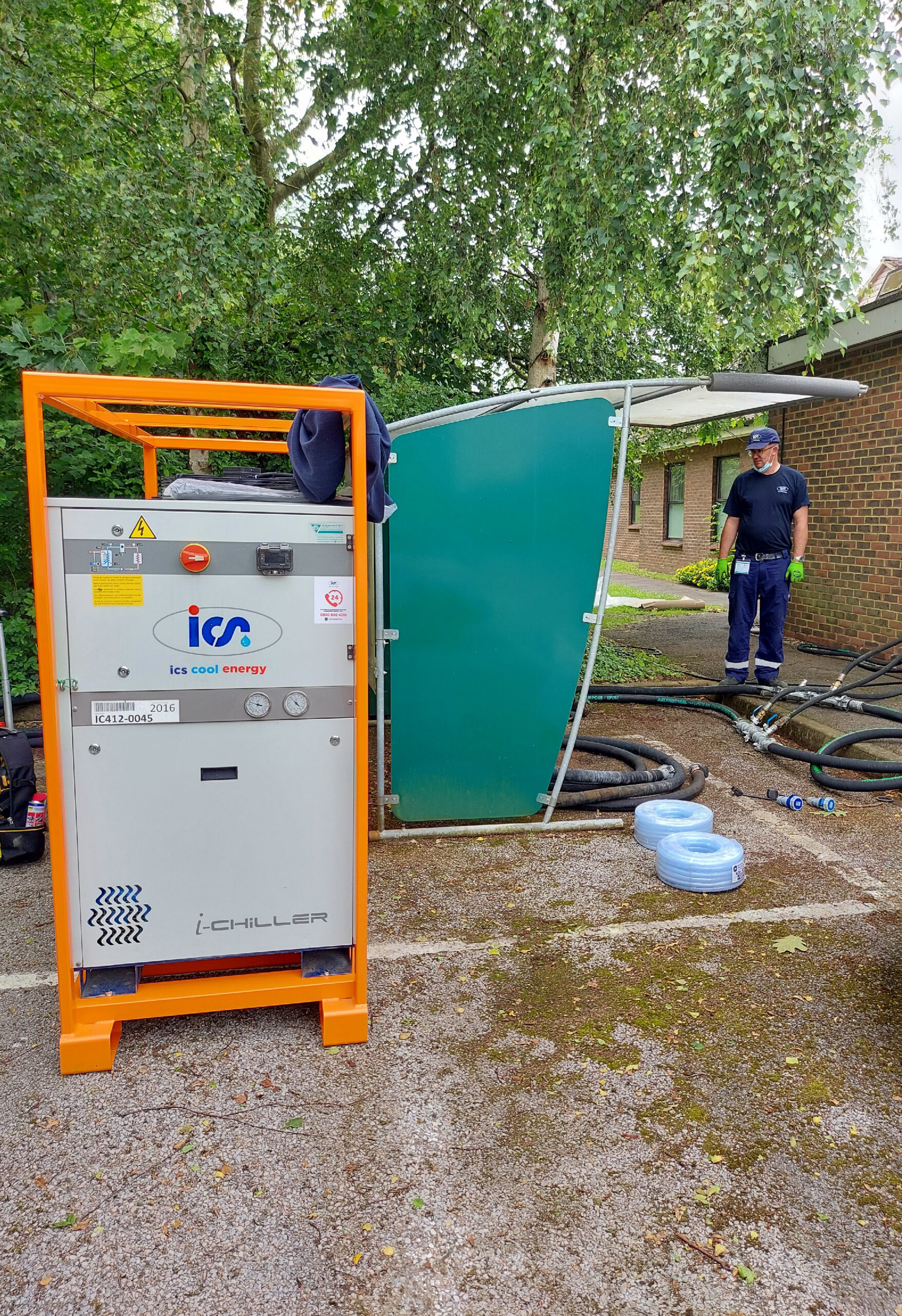
Lastly, preparing early also improves temporary cooling equipment availability should additional capacity be required. Rental chillers can provide extra cooling support during seasonal peaks or act as contingency backup in the event of equipment failure. Securing temporary capacity early ensures availability when demand for emergency cooling spikes industrywide. By planning ahead, sites can also ensure all necessary infrastructure, such as electrical stabbings, water connections, and designated placement areas is already in place, allowing temporary equipment to be deployed quickly and safely.
Practical Steps to Take Today
Manufacturers can take several practical steps today to prepare their cooling systems for the summer season.
1. Assess current cooling capacity
Review system performance during previous hot periods to determine whether current equipment can cope with anticipated seasonal loads.
2. Complete essential maintenance
Inspect and service equipment before temperatures rise. This includes checking electrical connections, testing safety devices, verifying refrigerant and oil levels, cleaning heat exchangers, reviewing control setpoints and confirming proper pump and fan operation.
3. Improve airflow efficiency
Ensure air‑cooled systems have clean coils, unrestricted air intakes and adequate clearance around condensers. Even minor airflow restrictions can significantly impact cooling efficiency under high ambient conditions.
4. Strengthen water treatment practices
Implement consistent fluid management, including chemical treatment, pH monitoring, fouling prevention and regular inspection of strainers and filters. Effective water treatment can be one of the strongest predictors of summer reliability.
5. Plan temporary cooling solutions
Sites with critical processes or limited redundancy should secure temporary cooling support ahead of the summer season. Hire chillers offer additional capacity for peak‑load periods and act as contingency cover in the event of equipment failure.
Be Cool for the Summer
Summer heatwaves may be intermittent, but their impact on manufacturing operations can be profound. Temperature control systems that perform adequately during mild weather can quickly become overwhelmed when exposed to sustained high temperatures, particularly if equipment is ageing, maintenance has been deferred or cooling capacity is already stretched.
By conducting early assessments, completing preventative maintenance and planning for increased seasonal demand, manufacturers can significantly reduce the risk of heat related disruption. Early action helps protect production continuity, maintain safe working environments and prevent costly emergency interventions.
Related Articles
May 29, 2026
Process Cooling in Summer: 5 Questions to Expose the Strategic Blind Spot Industry Can’t Afford to Ignore
Every summer, the industry is facing the same challenge: unpredictable temperatures and completely predictable pressure on cooling systems. As heat loads rise, your equipment works...
Read More
March 30, 2026
How to Determine the Right Cold Storage Size for Your Facility
Cold storage sizing mistakes are expensive in both directions. Build too small and you’ll face overcrowded aisles, compromised airflow, and product quality issues. Build too...
Read More
March 17, 2026
TCUs Don’t Fail. Water Kills Them
Why water treatment is the most overlooked service in plastics moulding cooling and temperature control — and what it costs when it’s ignored Here is...
Read More