



Updated: October 9, 2025
What To Do If Your Cold Storage Fails: Emergency Response Guide
Cold storage failure rarely announces itself at a convenient time. You’re more likely to discover the problem on a Monday morning, a holiday weekend, or right before a major shipment—when the stakes feel highest and options seem limited.
This guide walks through the immediate response steps, backup storage options, and prevention strategies that protect your inventory when equipment stops working.
Assess the situation immediately
When cold storage fails, most perishable goods can survive 4-6 hours in a sealed, well-insulated unit. That window gets shorter if doors are opened repeatedly or if the unit was already struggling to maintain temperature before the failure occurred. The first few hours determine whether your inventory survives or spoils.
Keep the unit sealed to maintain temperature
A closed cold storage unit works like a giant insulated cooler. The thermal mass of your stored products—especially when they’re densely packed—helps maintain safe temperatures longer than you might expect. Think of it like a full freezer holding its temperature better than an empty one during a power outage.
If you absolutely must access the unit, do it once with a clear purpose. Grab what you came for, then close the door right away. Multiple quick trips cause more damage than one slightly longer one.
Monitor internal temperature with calibrated tools
Temperature monitoring tells you how long you have before product safety becomes a concern. Check your unit’s built-in display first, or use a calibrated probe thermometer inserted through the door seal for accurate readings without opening the door. Refrigerated goods enter the danger zone at 4°C, while frozen products begin thawing around 0°C but remain safe below 4°C.
Record temperatures every 15–30 minutes — this documentation supports insurance claims and demonstrates compliance with food safety or pharmaceutical storage regulations if those apply to your operation.
Transfer contents to emergency backup storage
The decision to move inventory comes down to three factors: current internal temperature, how fast the temperature is rising, and how long repairs will take. If your unit is climbing toward the danger zone and repairs won’t happen within a few hours, relocation makes sense.
Moving products too early wastes time and resources. Moving them too late means spoilage. The sweet spot is typically when internal temperatures reach 1.7°C-3.3°C (35-38°F) for refrigerated goods, or when frozen items begin showing early signs of thawing.
Identify temporary cold storage options quickly
Having backup options mapped out before an emergency saves valuable time when every hour counts. The most common solutions include:
- Refrigerated trucks or trailers: Emergency Cold Storage suppliers, who are often are available for same-day rental and can park directly at your loading dock
- Nearby cold storage facilities: Warehouses, restaurants, or grocery stores sometimes have spare capacity they’re willing to share or rent
- Portable cold rooms: Rental companies can occasionally deliver within hours, depending on your location
- Dry ice or gel packs: Useful for smaller quantities or as a bridge while arranging larger-scale backup
For operations where cold chain integrity is non-negotiable—pharmaceuticals, certain food products, biological samples—pre-arranged backup agreements with nearby facilities eliminate the scramble during emergencies. A quick phone call beats searching for options while your temperature climbs.
Use insulated containers with proper thermal mass
When transferring products, insulated containers help maintain temperature during the move. The key concept here is thermal mass, which refers to how much cold material is packed together. Containers filled tightly with cold or frozen products stay cold longer than half-empty ones because the products themselves act as cooling agents for each other.
For short transfers, even heavy-duty coolers with ice packs work for smaller quantities. Larger operations benefit from insulated roll containers or pallet covers that wrap around entire pallets of product.
Coordinate transport to prevent temperature excursions
The transfer itself introduces risk that’s easy to overlook. Products sitting on a warm loading dock or in an unrefrigerated vehicle—even for just 15 or 20 minutes—can experience temperature spikes that compromise quality or safety.
Planning the logistics before moving anything prevents these gaps. Confirm your backup storage is ready to receive product, pre-cool vehicles if possible, and map out a clear path from your failed unit to the transport. The goal is minimizing the time products spend outside of temperature-controlled environments.
| Transfer Distance | Recommended Method | Temperature Monitoring |
| Same building | Insulated carts with ice packs | Spot-check before and after |
| Under 30 minutes | Refrigerated vehicle or heavy insulation | Continuous logging recommended |
| Over 30 minutes | Refrigerated vehicle required | Continuous logging required |

Document the failure and assess the cause
Thorough documentation protects you in several ways. Insurance claims require evidence of the failure, the timeline, and the resulting losses. Regulatory bodies may request records showing you followed proper protocols. And your own analysis helps prevent the same failure from happening again.
Photograph everything: the failed equipment, temperature readings at various times, product condition, and any visible damage or malfunction indicators. Write down the exact time you discovered the failure and every action you took afterward, including who you called and when.
Common causes of cold storage failure include:
- Power outages or electrical issues
- Compressor failure
- Refrigerant leaks
- Condenser or evaporator problems
- Thermostat malfunction
- Door seal degradation
- Blocked airflow from overstocking
Identifying the root cause helps you decide whether repair makes sense or whether the failure signals deeper problems with aging equipment. A refrigerant leak in a newer unit is a straightforward fix. The same leak in a 12-year-old system might indicate widespread corrosion that will cause repeated problems.
Repair or replace your cold storage system
Once the immediate crisis is handled, you’re facing a decision: fix what you have or buy a new cold storage unit. The answer depends on the age of your equipment, the nature of the failure, and how much downtime your operation can absorb.
For newer units with a single component failure—a bad compressor, a refrigerant leak—repair usually makes financial sense. On the other hand, if your equipment is approaching the end of its expected lifespan (typically 10-15 years for commercial cold storage), this failure might be the first of several.
Modern cold storage systems often include features that older units lack:
- Remote temperature monitoring: Alerts sent to your phone or email when temperatures drift outside acceptable ranges
- More efficient compressors: Lower energy costs over the life of the equipment
- Better insulation: Maintains temperature longer during brief power interruptions
- Automatic defrost cycles: Reduces ice buildup that can impair performance
For operations that can’t afford extended downtime during equipment replacement, cold storage rental or subscription services offer an alternative to ownership. You get reliable equipment, often with maintenance included, without the capital expenditure or the risk of being stuck with aging infrastructure that fails repeatedly.
Prevent future cold storage failures
The best emergency response is the one you never have to use. Prevention falls into three categories: maintenance, backup power, and monitoring.
Preventive maintenance catches problems before they become failures. Regular inspection of door seals, cleaning condenser coils, checking refrigerant levels, and testing electrical connections all extend equipment life and reduce surprise breakdowns. Most manufacturers recommend professional servicing at least annually, with more frequent checks for high-use commercial equipment.
Backup power addresses the most common cause of cold storage failure. Generators—whether portable or permanently installed—keep equipment running through outages. Uninterruptible power supplies (UPS) provide bridge power during the transition to generator power, preventing even brief temperature spikes that can occur in the seconds between power loss and generator startup.
24/7 temperature monitoring with automatic alerts means you learn about problems immediately rather than discovering them hours later. Modern monitoring systems send text or email alerts the moment temperatures drift outside acceptable ranges, which can give you several additional hours of response time compared to discovering a failure the next morning.
| Prevention Strategy | Upfront Cost | Ongoing Cost | Protection Level |
| Annual maintenance | Low | Low | Moderate |
| Backup generator | Moderate to High | Low | High for power outages |
| Remote monitoring | Low | High for all failure types | |
| All three combined | Moderate to High | Low | Very high |
The investment in prevention almost always costs less than a single major failure. Beyond the direct losses from spoiled inventory, consider the operational disruption, emergency service premiums, potential regulatory issues, and the time spent managing a crisis instead of running your business.
Building redundancy into your cold storage approach—whether through backup equipment, monitoring systems, or relationships with emergency rental providers—transforms cold storage failure from a crisis into a manageable inconvenience. The goal isn’t eliminating all risk, which isn’t realistic, but rather reducing the likelihood of failure and minimizing the impact when failures do occur.
Related Articles

June 10, 2026
Reducing Pharma Temperature-Control Risk: How Temporary Cold Store Solutions Protect High-Value Product
Pharmaceutical operations depend on precise temperature control across process cooling, controlled environments, and cold storage. Temporary cold store solutions help protect high-value, temperature-sensitive products during...
Read More
April 22, 2026
What is the difference between cold store and cold storage
A cold store is something you can walk into. It’s the actual warehouse, the refrigerated room, the structure with insulated walls and cooling equipment. Cold...
Read More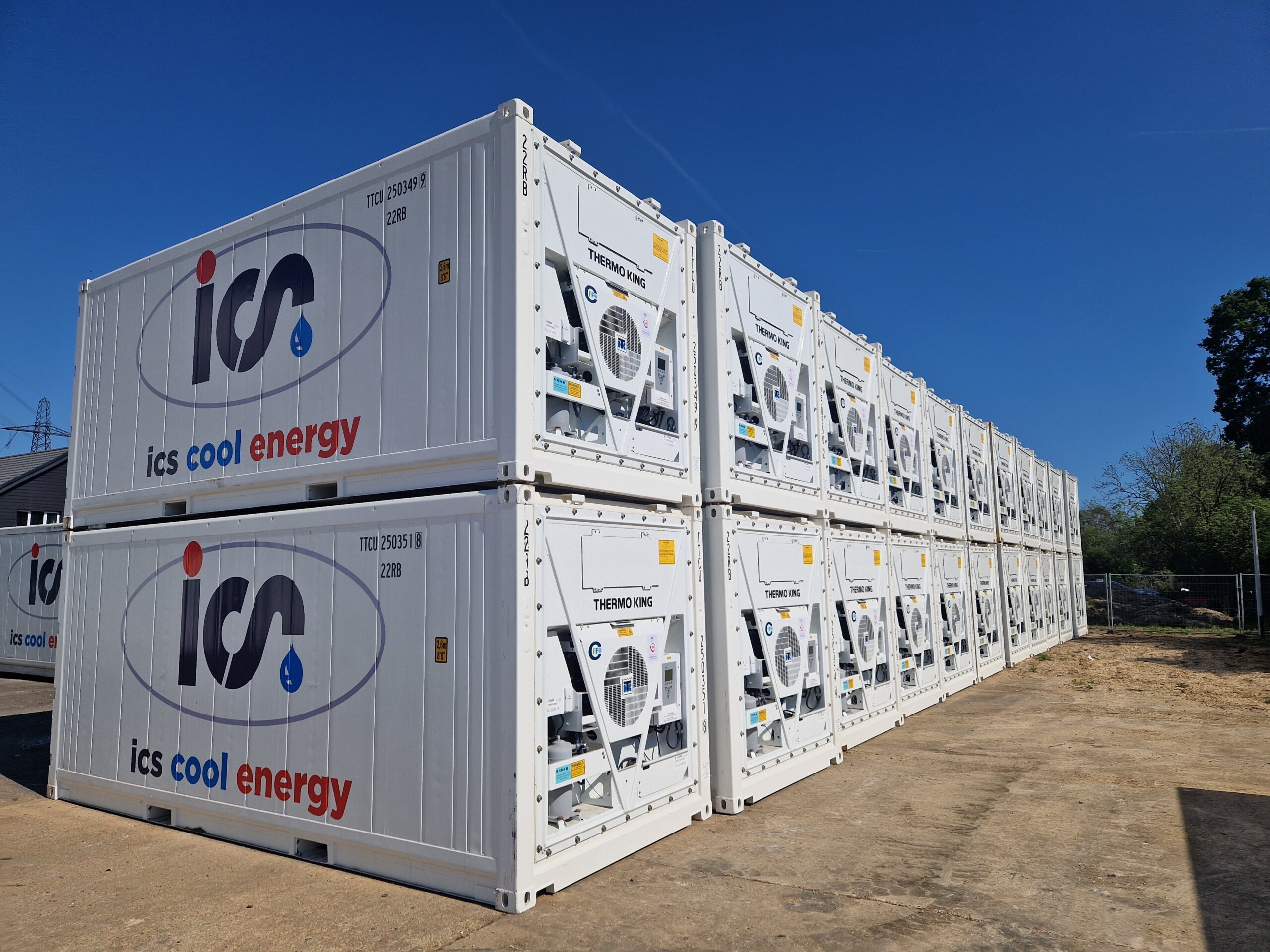
March 30, 2026
How to Determine the Right Cold Storage Size for Your Facility
Cold storage sizing mistakes are expensive in both directions. Build too small and you’ll face overcrowded aisles, compromised airflow, and product quality issues. Build too...
Read More