



Cold storage refers to temperature-controlled facilities that preserve perishable goods by maintaining specific low temperatures—typically ranging from chilled environments around 0°C to 8°C up to frozen storage at -18°C or colder. These systems slow the biological and chemical processes that cause products to degrade, extending shelf life across food, pharmaceutical, and industrial applications.
You’ll find cold storage facilities across nearly every industry: food and beverage, pharmaceutical facilities and even archival institutions preserving film and photographs.
How Does Cold Storage Work?
The way cold storage works comes down to one principle. When you lower the temperature around a product, you slow the activity of bacteria, enzymes, and other agents that break things down. A strawberry sitting on your kitchen counter might last a few days. Put that same strawberry in a refrigerated environment, and you’ve bought yourself a week or more.
Not all cold storage units operates at the same temperature, though. Different products have different requirements, which is why the industry distinguishes between two main categories:
- Refrigerated (chilled) storage: Temperatures typically range from 0°C to 8°C. Fresh produce, dairy, and certain medications fall into this category.
- Frozen storage: Temperatures drop to -18°C to -25°C or even lower. Meat, seafood, and ice cream require this deeper cold for long-term preservation.
You’ll also hear people talk about the “cold chain.” This term refers to the entire sequence of refrigerated steps—from production through transportation to final storage—that keeps products within safe temperature ranges. Think of it as a relay race where the baton is temperature control. If any single handoff fails, the whole chain breaks down.
Modern cold storage facilities combine several elements to maintain consistent conditions. Industrial refrigeration systems do the heavy lifting, while insulated wall panels prevent outside heat from creeping in. Temperature sensors track conditions around the clock, and carefully positioned fans ensure cold air reaches every corner of the space. When all of these components work together, you get an environment where products stay fresh far longer than they would otherwise.
Why Businesses Need Cold Storage
The most obvious reason is financial. Perishable inventory that spoils before reaching customers represents pure loss—money spent on products that can never generate revenue. For businesses dealing in fresh food, pharmaceuticals, or any temperature-sensitive goods, good quality cold storage units directly protects profit margins.
Then there’s the regulatory side. Food safety laws and pharmaceutical storage requirements specify exact temperature ranges that businesses are legally obligated to maintain. Falling outside those ranges can trigger fines, forced product recalls, or facility shutdowns. Beyond the legal consequences, proper temperature documentation creates the audit trail that inspectors expect to see.
Brand reputation ties into both of these concerns. Customers who receive spoiled food or ineffective medications don’t tend to come back. And in the age of online reviews, one bad experience can ripple outward quickly. Consistent temperature control throughout the supply chain protects the product quality that customers associate with your name.
| Business concern | What cold storage provides |
| Product spoilage | Extended shelf life through slowed degradation |
| Regulatory compliance | Documented temperature maintenance within required ranges |
| Customer safety | Prevention of bacterial growth and preservation of product efficacy |
| Inventory waste | Longer preservation of product value |
| Brand protection | Consistent quality from production to delivery |
The economics of accessing cold storage have shifted in recent years. Building a dedicated refrigerated facility requires significant capital investment, but that’s no longer the only path. Rental and subscription models now let businesses access professional-grade cold storage without the upfront costs. This flexibility proves especially valuable for companies with seasonal demand fluctuations or uncertain growth trajectories.
Energy costs matter too. Refrigeration systems run continuously, and older equipment can consume substantial power. Modern cold storage technology operates more efficiently, which helps control ongoing operational expenses while supporting sustainability goals.
How Cold Storage Facilities Work
Every cold storage system relies on the refrigeration cycle—a continuous loop that moves heat from inside the storage space to the outside environment. The concept is actually quite intuitive once you break it down.
A refrigerant circulates through the system. This is a special fluid that transitions easily between liquid and gas states, and that property is what makes the whole process possible. Inside the storage space, the liquid refrigerant absorbs heat from the surrounding air and evaporates into a gas. As it absorbs that heat, the air temperature drops.
The warm refrigerant gas then travels to a compressor, which pressurises it and pushes it toward a condenser unit—usually located outside the building. At the condenser, the refrigerant releases the heat it absorbed and returns to liquid form. From there, it cycles back to start the process again. This loop runs continuously, constantly pulling heat out of the storage space.
Refrigeration alone doesn’t create effective cold storage, however. Several other components work alongside the cooling system:
- Insulated panels: Specialised wall and ceiling materials that prevent external heat from entering the cold space. Without proper insulation, the refrigeration system would fight a losing battle against the outside temperature.
- Temperature monitoring: Sensors positioned throughout the facility track conditions in real time. When temperatures drift outside acceptable ranges, alarms alert operators before products are affected.
- Airflow management: Fans and vents positioned strategically ensure cold air circulates evenly. Poor airflow creates warm pockets where products can spoil even while the rest of the facility stays cold.
- Door systems: Every time a door opens, warm air rushes in. Rapid-close doors, strip curtains, and air curtains minimise this infiltration during loading and unloading.
Tip: When evaluating cold storage options, pay attention to monitoring capabilities. Real-time temperature tracking with automated alerts catches problems early—often before they affect your products at all.
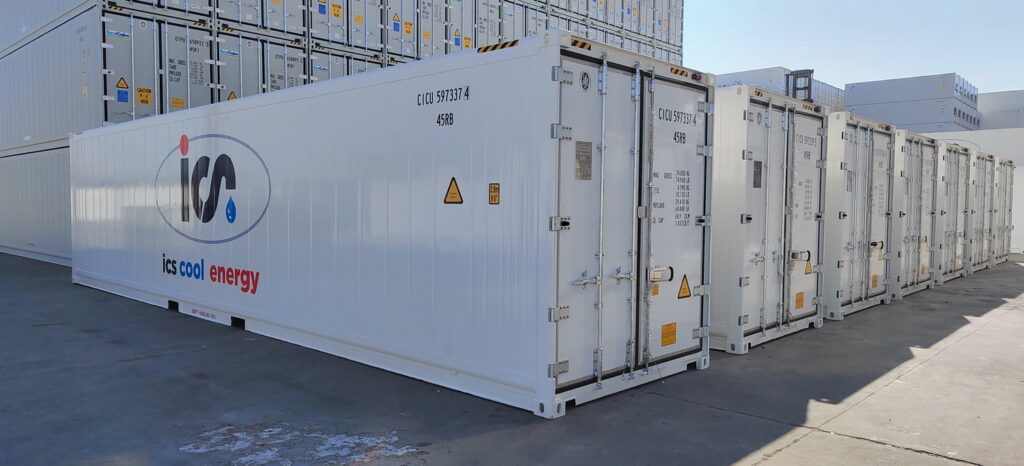
For businesses that prefer not to manage refrigeration infrastructure directly, rental solutions provide access to professionally maintained equipment along with the technical support to keep everything running properly.
Industries that rely on cold storage
Food and beverage cold storage
Food dominates global cold storage demand, with restaurants, distributors, processors, and retailers all dependent on refrigeration. Fresh produce requires careful temperature management — too warm accelerates ripening, too cold causes frost damage — often necessitating multiple storage zones. Dairy, meat, and seafood have even narrower margins, making an unbroken cold chain critical.
Blast freezing rapidly drops temperatures to form small ice crystals, preserving texture better than slow freezing. Walk-in chillers and freezers support daily food service operations at every scale.
Pharmaceutical and healthcare cold storage
Pharmaceutical cold storage operates under far tighter constraints than food applications. Vaccines, biologics, and medications often require narrow temperature ranges — some demanding ultra-low storage at -70°C or below. Excursions carry serious consequences: excess heat can destroy potency, while unintended freezing may render products unsafe.
Regulatory requirements are correspondingly strict, demanding validated equipment, calibrated monitoring, and detailed documentation of every temperature reading, alarm, and corrective action for potential regulator review. Healthcare organisations lacking dedicated infrastructure often benefit from partnering with specialists who understand these compliance demands
Manufacturing and industrial applications
Cold storage extends well beyond food and pharmaceuticals. Many manufacturing processes involve materials that require controlled temperatures, even if those materials aren’t what most people think of as “perishable.”
Chemical manufacturers often store reactive substances that become unstable at higher temperatures. Certain plastics and adhesives require climate-controlled environments. Electronics production sometimes involves components that are sensitive to temperature and humidity during storage.
Industrial cooling also supports manufacturing processes directly-removing heat from machinery, maintaining precise temperatures during production, or providing the controlled environments that certain assembly operations require. In these applications, cold storage isn’t about preservation so much as process control.
Finding the right cold storage solution for your business
Matching cold storage to your specific situation involves several considerations. The products you’re storing, the temperatures they require, your volume, and how your capacity requirements might change over time all factor into the decision.
Temperature requirements come first. Different products have different optimal ranges, and some tolerate variation better than others. A solution that works well for general food storage might fall short for pharmaceutical applications where tighter tolerances apply.
Capacity planning matters too—not just for current needs, but across seasonal peaks and projected growth. Fixed cold storage infrastructure commits you to a specific size, while rental arrangements offer flexibility to scale up or down as circumstances change.
Support and response time deserve attention as well. Refrigeration equipment can fail, and when it does, the clock starts ticking on your inventory. Access to rapid technical support can mean the difference between a minor disruption and a significant loss.
Related Articles

June 10, 2026
Reducing Pharma Temperature-Control Risk: How Temporary Cold Store Solutions Protect High-Value Product
Pharmaceutical operations depend on precise temperature control across process cooling, controlled environments, and cold storage. Temporary cold store solutions help protect high-value, temperature-sensitive products during...
Read More
April 22, 2026
What is the difference between cold store and cold storage
A cold store is something you can walk into. It’s the actual warehouse, the refrigerated room, the structure with insulated walls and cooling equipment. Cold...
Read More
March 30, 2026
How to Determine the Right Cold Storage Size for Your Facility
Cold storage sizing mistakes are expensive in both directions. Build too small and you’ll face overcrowded aisles, compromised airflow, and product quality issues. Build too...
Read More