


Why water treatment is the most overlooked service in plastics moulding cooling and temperature control — and what it costs when it’s ignored
Here is how it typically unfolds. A temperature control unit (TCU) starts causing problems. Parts come off the mould inconsistently. Cycle times creep up. The issues persist for weeks, sometimes months. Eventually, a service engineer is called in.
By that point, the damage is almost always beyond economical repair. Recommendations are made: filter installation, draining the system and refilling with treated water, but by then all the damage has already happened. A new TCU may be ordered. It arrives, gets installed, and is immediately introduced into the same environment, the same untreated water system that caused the original problems. The cycle begins again.
Rather than fixing the root cause, customers buy a new pump, a new heater element, then a new TCU. And then face the same problems all over again.
This pattern is well recognised by service engineers. When a TCU fails, the customer blames the unit. The engineer knows the water is at fault. That is a hard conversation to have at the best of times, but it is especially difficult when you are effectively telling the customer the problem is their own, in the middle of a production crisis.
What makes this particularly damaging is that many TCUs are not especially expensive to replace. So rather than investigating the root cause, some operations simply buy another unit when one fails, put it on the same system, and wait for it to degrade in turn. It is not treating the problem at the source. It is costing potentially thousands more in new equipment, repeatedly, without ever resolving the underlying issue.
The cost of this pattern is difficult to quantify precisely. It depends on the number of machines, the number of moulds, the cycle time, and the value of what is being produced. It could be a small component or a large, high-value part. But in every case, poor water quality means a higher cost per hour, per day, and per year of lost or degraded production.
Service engineers are typically only on site once or twice a year for scheduled servicing. For the rest of the year, the water system is entirely in the customer’s hands. Proactive advice can be given at the comminssioning of the system or at the start of a service contract — what to monitor, what treatment routine to follow — but very few customers act on it until they see a problem. And by then, the advice arrives too late.
What Water Actually Does to Your Systems
In plastics manufacturing, three things are non-negotiable: tight temperature control, fast heat transfer, and consistent uptime.TCUs exist to deliver all three circulating heated or chilled water through micro-channels within the mould tool to maintain precise process temperatures. Water quality is the critical variable that determines whether they succeed or fail.
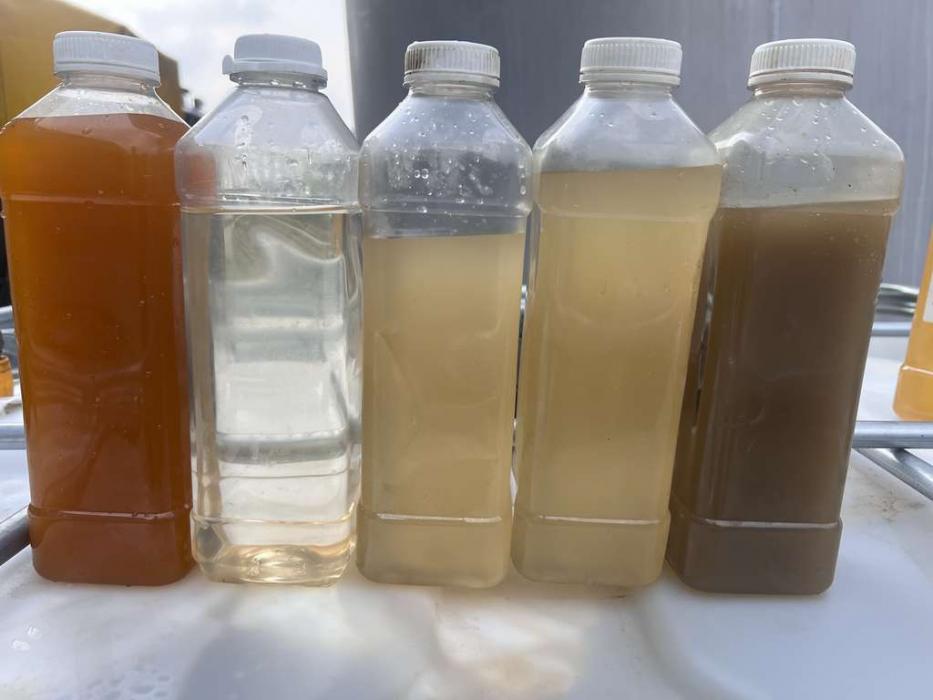
Poor water quality leads directly to longer cycle times, inconsistent parts, higher scrap rates, and unplanned downtime on moulding machines. The micro-channels within mould tools are extremely fine and block very easily. Any sediment, scale, or corrosion debris in the water circuit will restrict flow, disrupt temperature control, and compromise part quality.
Water is the number one chiller killer, and it’s equally the number one TCU killer .
Why TCUs Are Particularly Vulnerable
TCUs operate at higher temperatures than standard cooling circuits, and this is what makes water quality especially critical within them. Elevated temperatures accelerate corrosion. They also destroy inhibitors in the system faster. Even a water treatment programme that would survive in a standard cooling circuit will fail more quickly inside a TCU running at high temperature. Poor water that might last elsewhere will fail sooner in a TCU.
The consequences are wide-ranging. Sediment accumulates in the bottom of the tank and blocks internal components. Heater elements burn out. Pump failure, sticking valves, blocked heat exchangers, all of these can be caused by poor water quality inside a TCU.
In more severe cases, the risks go beyond equipment damage. One documented incident involved a pressurised system running at 140°C: heat transfer components became blocked, causing superheated water to spray onto the factory floor next to an operative. The customer blamed the unit. The unit was not at fault. Water quality was the cause.
The Mould Change and the Contamination
There is a structural challenge specific to the plastics industry that can continuously reintroduce contamination into water systems: mould changes.
When a mould is taken off the press, it is disconnected from the water circuit and put on a shelf. Residual moisture inside the mould’s micro-channels oxidises during that storage time. Sometimes it’s months, sometimes it’s a year or even longer. Rust forms. When the mould is reinstalled and reconnected, that rust and debris goes straight into the water system.
The nature of how mould storage works is that the front face of a mould tool is always kept clean and polished. The internal workings are routinely corroded. Unless a plastics company runs every mould indefinitely without ever taking it off the press, which is not commercially realistic, some degree of contamination on reconnection is unavoidable. Cleaning every mould thoroughly every time it comes off the press is equally unrealistic in practice.
This means ongoing filtration and water management are not optional extras. A well-treated system will be regularly challenged by reintroduced debris from mould changes. Without filtration in place, that debris accumulates, and the damage compounds.
Side-Stream Filtration: A Practical Response
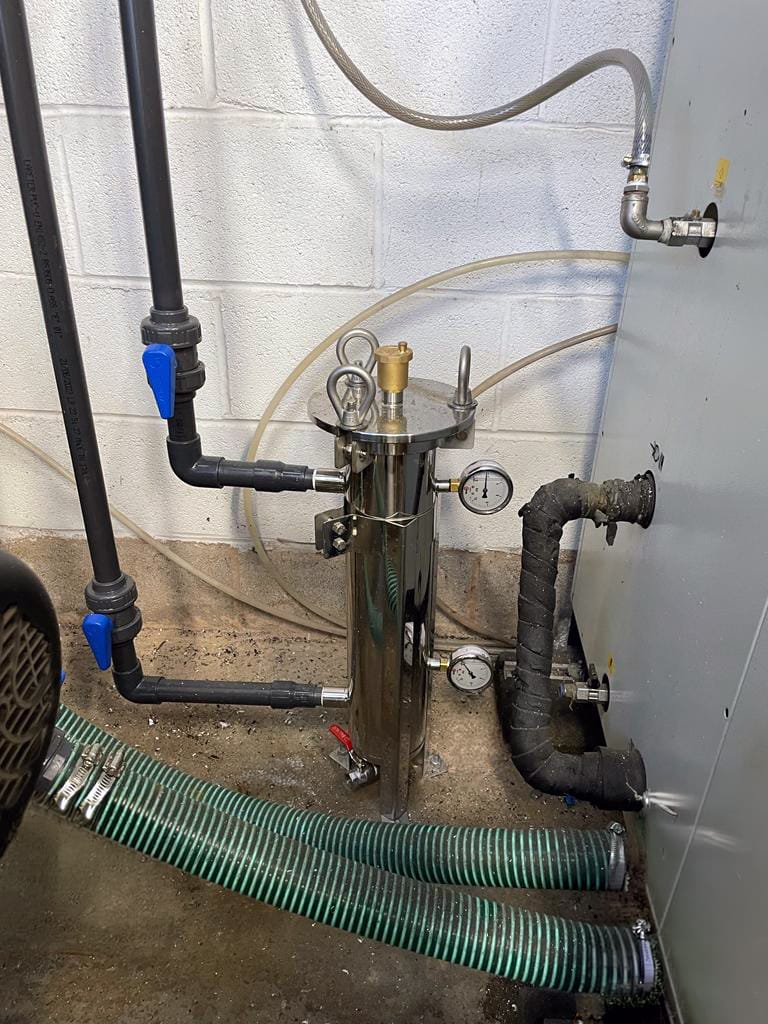
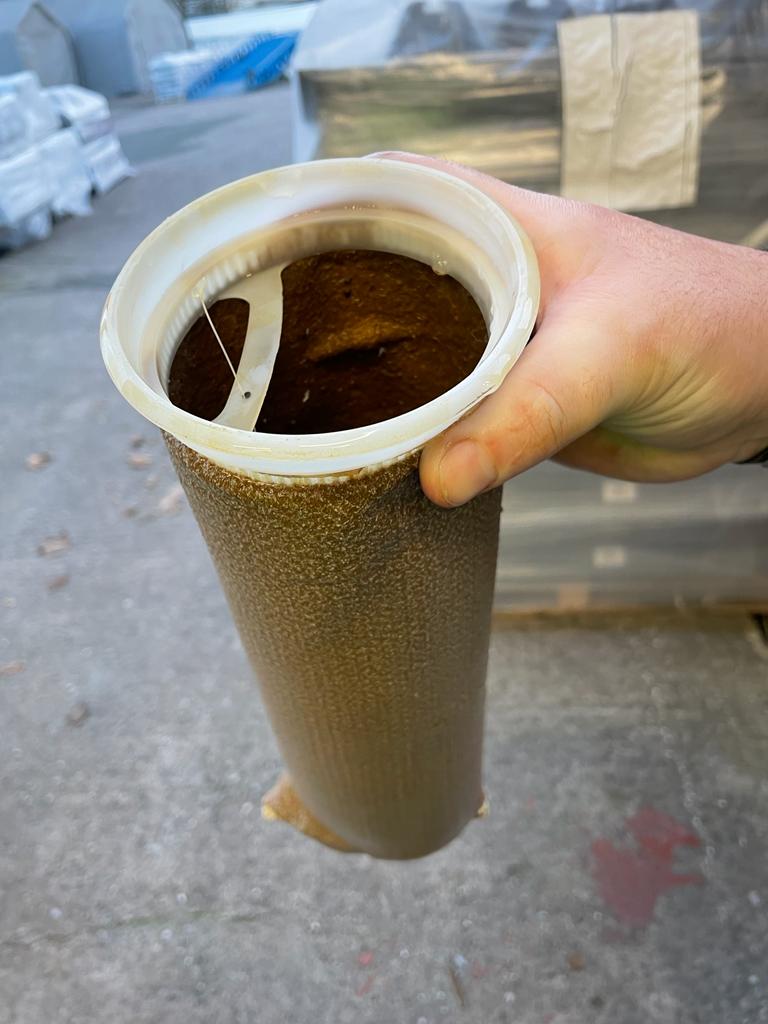
One solution that can be applied directly to TCUs is side-stream filtration. These systems run continuously alongside the TCU, drawing off a portion of the circulating water, filtering it, and returning it clean to the system.
Side-stream filters for TCU applications are rated to around 110°C. It’s appropriate for most TCU operating temperatures, as most systems in the plastics industry do not exceed this. They provide continuous mechanical removal of the sediment and debris that accumulates from corroded moulds and degraded components, addressing the contamination problem at its source rather than waiting for it to cause damage.
It’s also important to remember that water treatment applied to a chiller circuit does not carry through and benefit the TCU circuit. Each system needs to be managed and treated independently. In a large plastics facility, one site alone may run 70 or 80 TCUs, producing thousands or millions of parts per day. This represents a meaningful commitment. But it is a commitment that needs to be weighed against the cost of repeated equipment failure and lost production.
Water as a Process-Critical Input
Water is not background infrastructure in a plastics cooling or temperature control system; it is a process-critical input. Those are the words used by engineers who work with these systems daily. As critical as the resin being moulded. As critical as the uptime of the press itself.
Not many plastics companies are particularly good at water treatment. That is not a criticism — it is a gap in awareness that the industry has an opportunity to close. The combination of high-temperature TCU circuits, frequent mould changes that reintroduce contamination, and the direct link between water quality and part consistency creates risks that build quietly and expensively over time.
The tools to address it are practical and available: side-stream filtration, regular water analysis, appropriate inhibitor programmes, and a more proactive maintenance culture. Water quality is something that can be managed. Managing it accordingly can be done either through in-house engineers or a water treatment partner. It means maintaining inhibitor levels. It means fitting appropriate filtration. And it means recognising that the cost of doing this is not an overhead to be avoided; it is what guarantees uptime and cycle efficiency.
Customers who face the prospect of spending hundreds of thousands of pounds on new moulds, new chillers, and new TCUs because of accumulated water quality damage are in a far worse position than those who invested in water treatment from the outset. Service partners can advise, test, and specify the right solutions, but customers need to be open to the conversation, and open to the investment, before something breaks.
For plastics manufacturers, the question is not whether to invest in water treatment. It is whether to do so before the TCU fails, or after.
That is why we have invested in an in-house water treatment expert and laboratory with consultative support to provide manufacturers with water analysis, recommendations and remedial works to keep their industries running.
Find out more about our water treatment service.
Estimated reading time: 7 minutes
Related Articles
December 17, 2025
Turning Low Ambient Temperatures into Savings.
Free Cooling: the Most Cost-Effective and Environmentally-Friendly Way to Cool Processes and Buildings Improving the performance of industrial and commercial facilities’ systems is rightly a...
Read More
November 26, 2025
Why Flexible Financing Options Matter More Than Ever
Navigating Investment in UK Manufacturing As the UK government prepares to deliver the next budget, uncertainty is the prevailing mood, felt on factory floors and...
Read More
October 30, 2025
Meeting the Pressures of Modern OEM Design. Why Accredited Cooling Systems Make the Difference
Tight budgets, compressed timelines, and rising expectations: how OEMs can help ensure reliability and performance of their solutions through smarter cooling partnerships. Original equipment manufacturers...
Read More