




How Modular Cold Rooms Cut Energy Costs for Modern Businesses
Cold storage electricity bills have a way of climbing steadily while everything else stays the same. The refrigeration system runs around the clock, compressors cycle on and off, and each month the invoice arrives a little higher than expected.
Modular cold rooms offer a different approach – factory-engineered efficiency that addresses the biggest energy drains from day one. This guide covers the specific features that reduce consumption, the operational habits that preserve those gains, and how to evaluate suppliers when efficiency claims all start to sound alike.
Why cold rooms drive high energy costs for modern businesses
Cutting energy costs in modular cold rooms relies on three areas: PIR panel insulation, variable-frequency drives that adjust compressor power to demand, and smart controls that run defrost cycles only when needed. Refrigeration operates continuously, making it one of the largest electricity consumers in any cold storage facility.
Crucially, purchase price represents only a small fraction of lifetime costs – electricity typically dominates total ownership costs, making efficiency the most important factor when choosing a system
Several common problems drive energy bills higher than they need to be:
- Thermal leakage: Heat entering through walls, doors, and worn seals forces compressors to work overtime
- Fixed-speed compressors: Older units run at full power even when partial cooling would suffice, then shut off completely – wasting energy with every cycle
- Timer-based defrosting: Traditional systems defrost on a schedule whether frost exists or not, adding unnecessary heat to the cold room
- Blocked airflow: Products stacked against vents or poor layout forces the system to push harder to circulate cold air
How modular cold rooms reduce energy use compared to traditional cold storage
Modular cold store arrives as prefabricated, factory-engineered sections – insulated panels, pre-matched refrigeration components, and precision-fitted seals designed to work together – that are assembled into a permanent, temperature-controlled room on site. That sets it apart from a self-contained cold room container, which arrives as a single, fully-built unit that only needs connecting to power. It also differs from traditional cold storage, which is built entirely on site from the ground up, with quality depending heavily on the installation crew.
The difference shows up in the details. Factory manufacturing eliminates the gaps, uneven seams, and thermal bridges that commonly appear in site-built installations. When panels fit together precisely, less cold air escapes and less warm air gets in.
| Factor | Modular Cold Rooms | Traditional Cold Storage |
| Installation | Prefabricated sections that are assembled on site | Cold storage containers arrive fully built, which allows you to plug it in and begin to use it straight away |
| Insulation consistency | Uniform quality from factory conditions | Varies based on installation quality |
| Scalability | Uniform quality from factory conditions Expandable or relocatable | Permanent and difficult to modify |
| System matching | Components optimised together | Parts often sourced separately |
There’s another practical advantage worth mentioning. Modular systems can be right-sized to actual storage requirements and expanded later if demand grows. Traditional construction tends to lock you into whatever capacity you build initially, which often means paying to cool space you don’t use.
High-performance PIR insulation panels
PIR is a rigid foam insulation with excellent thermal resistance and low thermal conductivity, slowing heat transfer into the cold room. When less heat enters, compressors run less often and for shorter periods, reducing the workload on the refrigeration system. Thicker panels generally provide better insulation, though optimal thickness depends on target temperature – freezer applications typically require thicker panels than chilled storage due to the greater temperature difference
Variable speed and inverter compressors
Traditional compressors operate like a light switch – fully on or off – cycling repeatedly and wasting energy with each ramp-up to full power. Variable frequency drives (VFDs) change this pattern entirely by adjusting compressor speed to match the actual cooling load at any given moment.
Light demand means the compressor runs slowly; heavy demand means it speeds up. Inverter compressors work on a similar principle. Both technologies reduce the energy wasted during startup cycles and avoid the inefficiency of running at full capacity when partial power would suffice
Smart controls and real time energy monitoring
Automated control systems manage multiple variables simultaneously – temperature setpoints, defrost timing, fan speeds and compressor staging – adjusting based on sensor data rather than fixed schedules. Traditional systems run defrost cycles on timers regardless of actual frost buildup, whereas smart controls use sensors to trigger defrost only when needed.
Real-time energy monitoring adds further value, making it easy to spot unusual consumption patterns. A sudden spike often signals a developing problem such as a failing seal, dirty condenser or refrigerant issue before it becomes a major repair
Precision temperature and humidity control
Temperature swings cost money. Every time a cold room warms up and the system works to bring it back down, that recovery cycle consumes extra energy. Stable temperatures avoid these corrections.
Precision control also prevents overcooling, which wastes electricity while potentially damaging temperature-sensitive products. Maintaining exactly the temperature you need – not colder – keeps energy consumption at the minimum required for proper storage.
Operational best practices to lower cold room running costs
Even the most efficient equipment underperforms without good operational habits. How a cold room gets used day to day often determines whether it achieves its rated efficiency or falls short.
1. Maintain door seals and strip curtains
Every time a door opens, cold air spills out at floor level while warm, humid air rushes in at the top. Damaged seals and missing strip curtains make this exchange worse, forcing compressors to remove both the heat and the moisture that enters.
A quick visual inspection every few weeks catches deteriorating seals before they become expensive problems. Look for gaps, cracks, or sections that no longer make firm contact with the door frame.
2. Schedule defrost cycles and condenser cleaning
Ice buildup on evaporator coils acts as insulation in the wrong place – it reduces the coils’ ability to absorb heat from the air. The thicker the ice layer, the harder the system works to maintain temperature.
On the warm side of the system, dirty condensers create a similar problem. Dust, debris, and grime reduce the condenser’s ability to reject heat, forcing the compressor to run longer. Regular cleaning – monthly in dusty environments, quarterly in cleaner ones – maintains optimal heat transfer.
3. Right size cooling load to real demand
Running a large refrigeration system to cool a half-empty cold room wastes electricity on unused capacity. The system doesn’t know the space is empty; it simply maintains the target temperature throughout the entire volume.
Matching refrigeration capacity to actual storage needs improves efficiency. Some modular systems allow capacity adjustments as requirements change, avoiding the penalty of permanent oversizing.
4. Train staff on door and stocking discipline
Every second a door stays open, thermal exchange occurs. Staff who understand this connection between door time and energy costs tend to work more efficiently – entering with a plan, retrieving what they need, and closing the door promptly.
Product placement matters too. Boxes stacked directly against air vents block circulation, creating warm spots that the system struggles to cool. Leaving space for airflow helps the cold room maintain even temperatures with less effort.
Pairing modular cold rooms with solar and smart energy systems
On-site solar generation can offset a significant portion of cold room electricity consumption. The continuous, predictable load profile of refrigeration actually makes it well-suited for solar integration – cold rooms consume power steadily rather than in unpredictable spikes.
Cold rooms also offer an interesting opportunity for load shifting. Because the stored products and the structure itself hold cold (thermal mass), a well-insulated cold room can be pre-cooled during off-peak electricity hours and then coast through expensive peak periods with reduced compressor operation.
Several integration options exist:
- Rooftop solar: Generates electricity during daytime hours when cooling demand is often highest
- Battery storage: Stores excess solar generation for overnight use when panels aren’t producing
- Time-of-use optimisation: Controls that automatically adjust cooling intensity based on current electricity rates
- Demand response participation: Some utilities offer incentives for facilities that reduce consumption during grid stress events
ROI and payback of an energy efficient modular cold room
Higher-efficiency modular cold rooms typically cost more upfront than basic alternatives. However, lower monthly operating costs offset this premium over time.
The payback period – how long it takes for energy savings to cover the additional investment – depends on several factors specific to each installation:
- Local electricity rates: Higher rates mean faster payback
- Operating hours: Facilities running 24/7 see returns faster than seasonal operations
- Ambient temperature: Hot climates increase cooling demand, amplifying the value of efficiency
- Storage temperature: Freezer applications consume more energy than chilled storage, making efficiency gains more valuable
When comparing options, looking at total cost of ownership over five to ten years reveals the true economics better than purchase price alone. A cheaper system that costs more to operate often ends up being the expensive choice.
How to choose an energy efficient modular cold room supplier
Marketing claims about efficiency are easy to make and difficult to verify without the right information. A few key indicators help separate genuine performance from promotional language.
Verified energy monitoring capability
Built-in metering and reporting features allow you to verify real-world performance after installation. They also help identify developing problems – a gradual increase in consumption often signals an issue before it becomes a major failure.
Ask whether energy monitoring comes standard or as an optional upgrade, and what data the system actually tracks.
Purpose built refrigeration for your temperature range
A system optimised for fresh produce storage performs differently from one designed for frozen goods or pharmaceutical applications. Generic solutions often sacrifice efficiency for flexibility.
Matching the refrigeration system to your specific temperature requirements and product types improves both efficiency and storage quality. A freezer system running a chilled application wastes energy; a chilled system struggling to reach freezer temperatures works too hard and wears out faster.
Documented performance and warranty data
Request insulation R-values, efficiency ratings, and detailed warranty terms. Manufacturers confident in their products provide this documentation readily.
Longer warranties on compressors and panels often indicate higher-quality components designed to maintain efficiency over time. Short warranties sometimes signal that the manufacturer expects problems.
Power a lower cost cold chain with the right modular partner
Choosing a modular cold room based on purchase price alone often leads to higher total costs over the system’s lifetime. The electricity consumed over years of operation typically exceeds the initial investment by a wide margin.
Evaluating total cost of ownership – including energy consumption, maintenance requirements, and expected lifespan – reveals which options truly deliver value.
Related Articles
August 5, 2026
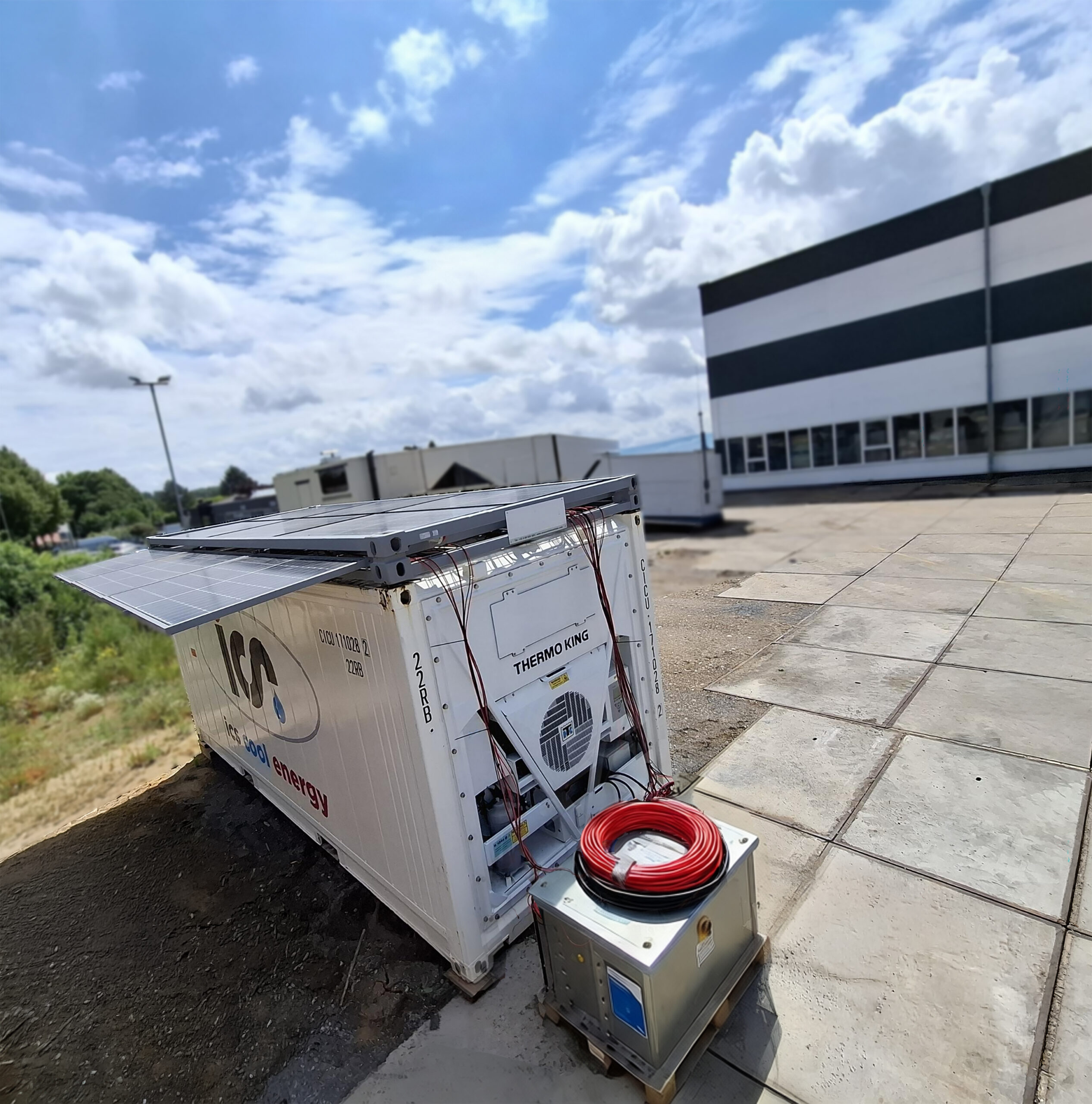
ICS Cool Energy runs 7-day trial for solar-powered refrigerated container, delivering 24/7 operation at -18°C setpoint
Field test demonstrated ICS Cool Energy’s solar-powered cold store container can maintain precise temperature for frozen applications for over a week, even under adverse conditions....
Read More
June 26, 2026
Cold Storage Hire Vs Buying: Making The Right Decision For Your Business
The choice between hiring a cold storage unit and buying a cold storage room shapes your cash flow, your operational flexibility, and how much hassle...
Read More
June 9, 2026
Reducing Pharma Temperature-Control Risk: How Temporary Cold Store Solutions Protect High-Value Product
Pharmaceutical operations depend on precise temperature control across process cooling, controlled environments, and cold storage. Temporary cold store solutions help protect high-value, temperature-sensitive products during...
Read More